 Reviews


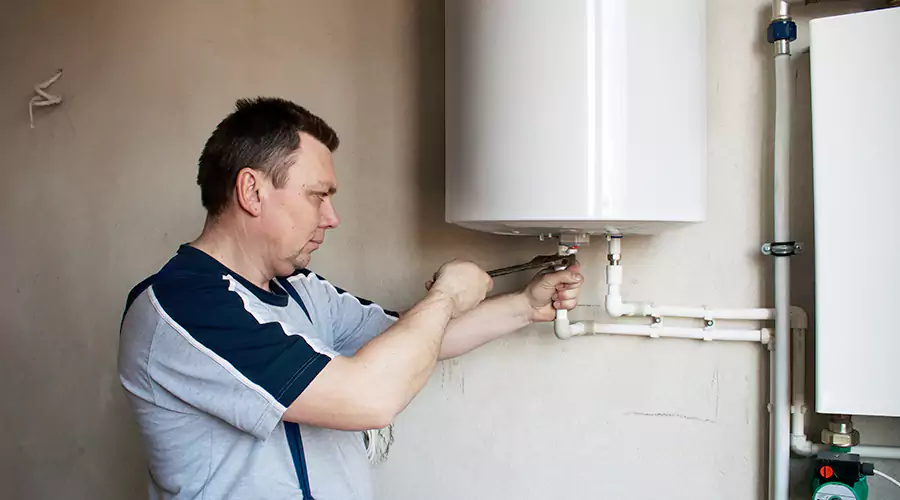
A gas water heater works by burning natural gas beneath a storage tank while a thermostat cycles the flame to hold your set temperature. The design has run nearly unchanged for decades because it heats water faster than electricity at a lower fuel cost.
Cold water enters at the bottom and hot water leaves at the top. Everything else in the machine exists to manage that one loop safely.
Understanding the parts pays off directly. Owners who know the cycle diagnose most problems before calling anyone.
The Parts of a Gas Water Heater
Ten parts run the whole show and most fit in one glance at the unit. The gas hot water tank stores 40 to 50 gallons in a standard home while the heat-making hardware sits underneath. Here's each part and its job:
- Dip tube: A plastic pipe runs from the cold inlet at the top down to near the bottom so cold water enters where the heat is without mixing into the hot layer above.
- Burner assembly: The burner sits centered under the tank's bottom head and the flue.
- Gas control valve: The valve controls gas flow to the burner and a front knob sets your temperature.
- Thermopile: This part converts heat from the pilot flame into a small electrical current that holds the internal valve open.
- Pilot light or igniter: The always-on flame or electronic spark that lights the burner.
- Flue and flue baffle: The baffle inside the flue directs heat into the tank instead of up the vent.
- Anode rod: A sacrificial magnesium or aluminum rod attracts corrosive elements and protects the tank walls from rust.
- Temperature and pressure relief valve: The safety valve that vents dangerous pressure automatically.
- Tank lining: Porcelain enamel glass coats the interior against corrosion and thermal shock.
Insider tip: The data plate on the side lists capacity and BTU input and the model's first hour rating. Photograph it once and every future repair call goes faster.
How the Heating Cycle Runs?
The heating cycle runs itself around one temperature reading. Cold water enters through the dip tube and settles at the bottom of the tank. The thermostat inside the gas control watches that bottom layer constantly.
The sequence fires in order:
- Water temperature drops below the set point and the gas valve opens.
- The pilot light or electronic ignition lights the burner beneath the tank.
- The flame heats the water through the tank bottom and through the central flue tube running up the middle.
- Heated water rises to the top of the tank ready for use.
- The set temperature arrives and the valve closes and the burner shuts off.
Physics does the sorting for free. The burner's heat creates convection currents that distribute warmth through the water while density keeps the hot supply floating at the outlet. This bottom-fired design is also why a gas hot water heater recovers a drained tank faster than a comparable electric unit.
Pilot Lights and Ignition Safety
Ignition is where the safety engineering lives. A standing pilot burns continuously on older units while newer models spark electronically on demand. Either way a heat sensor stands guard over the gas supply.
The guard works by physics. The thermopile only makes current while the pilot flame heats it. A blown-out pilot kills the current and the gas valve snaps shut on its own. The older single-sensor version of this part is the thermocouple which fails often enough that replacing one costs $100 to $325.
Relighting has one hard rule. Follow the safety manual's instructions and never light by hand if the heater has an electronic ignition system. Repeated pilot outages point at the sensor rather than bad luck since a pilot that won't ignite usually traces to a faulty thermocouple or gas control valve.
Insider tip: A healthy pilot burns steady blue. A lazy yellow flame means combustion trouble and deserves a service call before it becomes a no-hot-water morning.
Venting and the Power Vent Water Heater
Combustion makes exhaust and the exhaust must leave. The vent draws the poisonous byproducts safely out of the home through one of three designs. Your house's construction picks the design.
Atmospheric venting is the classic. Hot exhaust rises naturally up a metal flue through the roof at no added equipment cost. A power vent water heater adds a fan instead and pushes exhaust through an inexpensive pipe out a side wall. The power vent option costs $300 to $600 more because of the integral fan while buying placement freedom anywhere near an exterior wall.
Sealed homes need the third design. Direct vent draws combustion air from outside through sealed piping and adds $500 to $1,200 in materials and labor. Tightly built modern homes often require it because the heater can't safely borrow indoor air.
Tankless Gas Water Heaters Explained
A tankless gas water heater deletes the storage tank and heats water only while it flows. A tankless gas hot water heater fires the moment a tap opens and stops the moment it closes. Engineers call the category demand water heater systems for exactly that reason.
The mechanics scale up dramatically. A gas instantaneous water heater modulates a powerful burner to match your flow in real time, and that takes 180,000 to 199,000 BTU of input against 40,000 to 50,000 for a standard tank. The fuel appetite drives the install complexity since tankless gas typically requires a 3/4 inch or 1 inch gas line where a 1/2 inch exists.
Names never change the machine. Shoppers typing instant water heater gas into a search bar mean these same units. The payoff for the complexity is endless hot water plus a 15 to 20 year lifespan against 8 to 12 for tanks.
Insider tip: Old tank vents can't be reused for tankless and new venting runs $100 to $600. Any tankless quote missing a venting line item is incomplete.
Tank vs Tankless at a Glance
Both designs burn the same fuel toward different trade-offs. The tank buys low upfront cost while tankless buys efficiency and lifespan. The table settles the comparison in 2026 numbers.
| Factor | Gas tank | Gas tankless |
|---|---|---|
| Installed cost | $1,400 to $3,200 | $2,100 to $5,600 |
| Lifespan | 8 to 12 years | 15 to 20 years |
| Hot water supply | Limited by tank size | Endless at rated flow |
| Standby loss | Constant reheating | None |
| Tax credit | Rarely qualifies | Up to $600 federal |
Household rhythm decides the winner. Big simultaneous users need tankless flow ratings checked carefully while small steady households often never outrun a 50-gallon tank.
Gas Water Heater Installation Costs in 2026
Gas water heater installation prices on three line items. The unit runs $600 to $1,400 while labor adds $400 to $1,000 and venting plus permits add $200 to $800. Vent type moves the total more than brand ever does.
The simple swap stays affordable. A like-for-like 40-gallon atmospheric-vent replacement runs $1,000 to $1,900 and a 50-gallon version runs $1,200 to $2,200. Tankless conversion sits in its own bracket at $2,500 to $5,000 once gas line and venting work joins the invoice.
Permits protect more than they annoy. Gas appliance work nearly always requires one and the inspection guards the combustion and venting that keep exhaust out of bedrooms.
Choosing the Best Gas Water Heater
The best gas water heater for your home matches three numbers rather than a brand ranking. Capacity and recovery and vent compatibility decide satisfaction. Price differences within a size class stay small compared to sizing mistakes.
Work the three numbers in order:
- Capacity: A 40-gallon tank serves two to three people while 50 gallons fits four or more.
- First hour rating: This figure states how much hot water the unit delivers in its first hour of demand and it matters more than raw tank size for busy mornings.
- Vent match: Buy the vent type your home already supports unless you're paying for the upgrade knowingly.
Insider tip: Plumbing supply houses often sell units $100 to $200 below big-box prices and your plumber's contractor pricing may beat both.
Maintenance That Extends the Tank
Three habits push a gas unit toward the long end of its lifespan. Sediment and corrosion do the killing so prevention aims at both. The routine costs under an hour a year.
- Flush yearly: Draining a few gallons removes the sediment that insulates the burner from the water.
- Check the anode rod at year three: Checking it regularly is one of the most important maintenance tasks and a $30 rod swap can add years.
- Test the relief valve twice a year: Lift the lever briefly and confirm it snaps shut dry.
- Keep the burner area clear: The flame needs combustion air and stored boxes steal it.
Tankless owners trade the flush for a descale since a yearly tankless flush costs $150 to $250 and prevents heat exchanger damage.
Conclusion
A gas water heater is a burner and a tank and a thermostat running one loop on repeat. The dip tube feeds the flame's side of the tank while convection stacks the hot supply at your outlet. Venting and gas line work belong to licensed pros in every scenario. This week find your unit's data plate and check the pilot's color. Two minutes of looking teaches you most of what this article just did.
FAQs
How fast does a gas tank reheat after a big draw?
Roughly 30 to 45 minutes for a full 40-gallon recovery. That beats electric units by a wide margin.
Why does my heater rumble when the burner runs?
Sediment on the tank bottom traps water that pops as steam. A flush usually quiets it.
Can I convert my electric heater spot to gas?
Only with a gas line and a vent path. The venting requirement decides feasibility more than the fuel line.
What temperature should the dial hold?
Near 120°F for most homes. The setting balances scald safety against bacteria control and energy use.
Does a gas water heater work during a power outage?
Standing-pilot atmospheric models do. Power vent and electronic-ignition units need electricity to run.
How do I know when replacement beats repair?
Gas repairs run $50 to $600 so a big repair on a tank past 10 years fails the value test.